Passion Projects
Mornings for Focused Academics, Afternoons for Passions
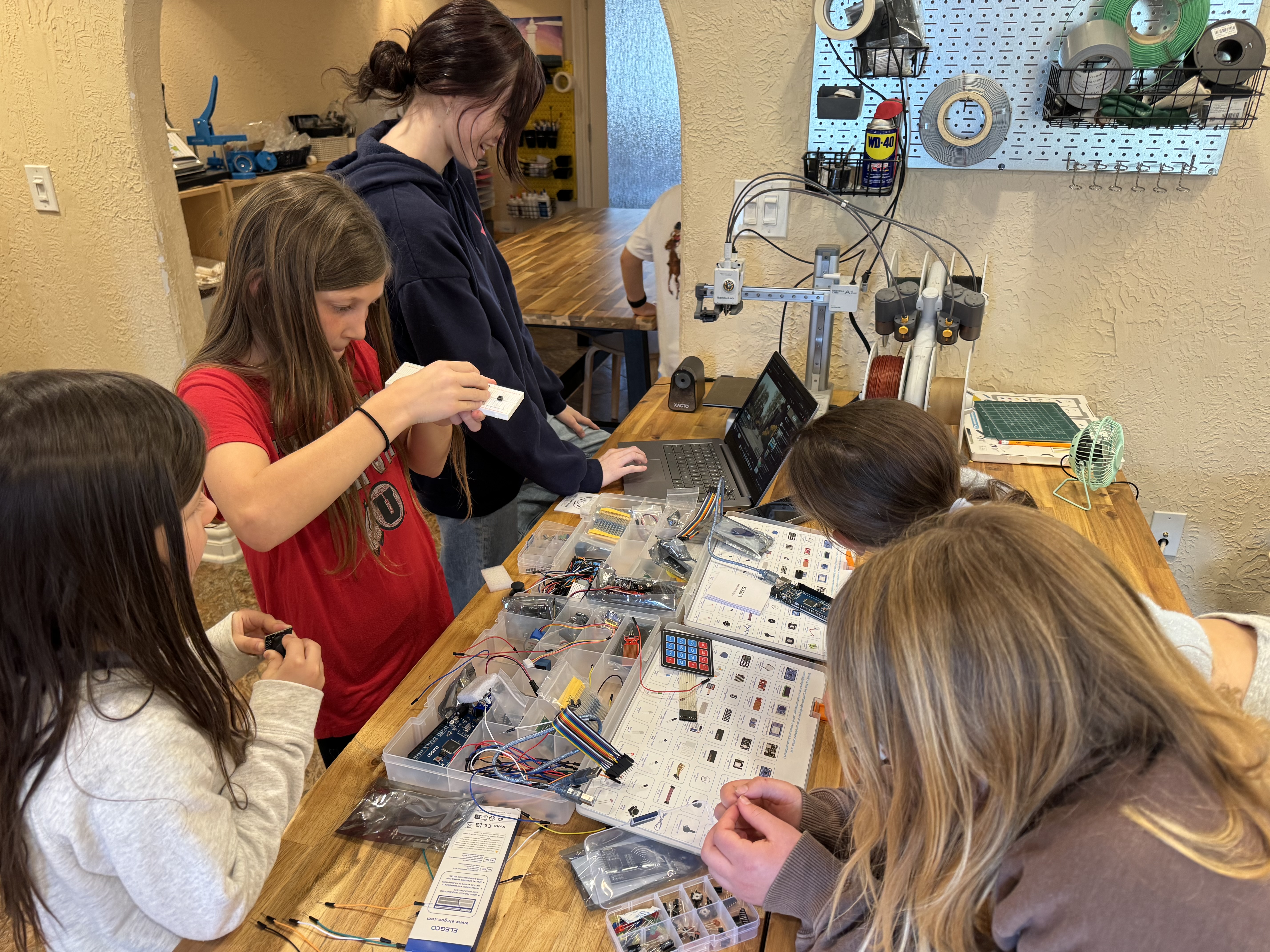
Every day at Arete Academy follows the same rhythm. Mornings are for the fundamentals: reading, writing, and math. Afternoons belong to the students, who spend that time on a passion project they chose themselves.
People often ask why we split the day this way. Our answer is that the two halves need each other.
Why the mornings are non-negotiable
Passion doesn’t replace skill. A child who wants to write a fantasy novel needs strong writing. A child who wants to build a business needs math. A child who wants to understand how the world works needs to read well enough to go find out.
So we protect the mornings. Students work on core academics with focus and discipline, building the tools that make everything else possible. The mornings also teach something about character: you show up, work hard, and you hold yourself to a standard of excellence even when the work isn’t fun.
Why the afternoons change everything
In the afternoon, students aren’t completing an assignment. They’re pursuing something they care about: building, designing, researching, writing, coding, cooking, launching a small business, mastering an instrument. The topic is theirs, and so are the decisions.
That ownership changes how students work. When a child picks the project:
Motivation is internal. No one has to bribe or nag a student into working on something they’re excited about.
Struggle becomes productive. When a prototype fails, or a draft falls flat, students want to fix it. Setbacks become part of the work instead of a verdict on them.
Skills get used. The morning’s writing, reading, and math show up in real work, and students see why they matter.
Students learn how to learn. They set goals, manage time, find resources, ask for feedback, and finish what they start. Those habits matter far more than any single topic.
What coaches do
Our coaches don’t hand out answers. They ask questions, offer resources, and push students to go further than they thought they could. A coach might ask, “What’s your plan for this week?” or “Who could you show this to for feedback?” or “What would make this even better?”
Students share their work through portfolios, presentations, and our annual Symposium. Showing real work to a real audience raises the stakes in the best way.
Passion isn’t a distraction from rigor
Some people worry that letting children follow their interests means lowering the bar. In our experience, the opposite is true. Students hold themselves to higher standards on work they care about. They revise, practice, and push through failures because the work is meaningful to them
Passion projects also give students something many children rarely get: the experience of making something real and being proud of it.
What this looks like at home
You don’t need a microschool to try this. A few ideas:
Ask your child what they’d work on for an hour a day if no one assigned anything.
Let them pick the project, and let them struggle with it a little before you step in.
Ask questions instead of giving answers: “What’s your next step?” “What’s hard about this?”
Give them a chance to share what they made with someone outside the family.
When children spend their days building real skills and pursuing real interests, they come to see themselves as capable, curious, and ready for what’s ahead.